

Self-Love vs. Self-Care: Performing or Becoming?
This diary entry may challenge some readers to consider whether their routines reinforce embodied self-worth or simply maintain comfort under the guise of growth, while inviting other readers to challenge their beliefs on alignment between being and doing—where self-care becomes the reinforcement of self-love, not a substitute for it. If you’ve ever questioned whether you’re healing or performing healing, this reflection offers clarity, integration, and a mature framework for practicing both in partnership.
SELF-CARECULTURE & COLLECTIVE HEALINGWELLNESSEMOTIONAL MASTERYHOLISTIC HEALTH


February 16, 2026
Feeling: Observant. Clear. Not judgmental—just noticing the pattern.
Lately, I've been observing people.
scrolling. observing and listening.
Not to be critical.
Not to pass judgment.
Just to be clear.
It appears that everyone is taking care of themselves.
The routines are lovely.
The captions are well-written.
The language has changed over time.
"Reset on Sunday."
"Keeping my peace."
"Determining limits."
"I learned from therapy..."
"Selecting myself."
It appears to be growth.
It sounds like consciousness.
It seems like advancement.
However, I keep asking myself:
Is it change?
Or is it involvement?
Because I can see something quieter underneath it from where I sit.
Avoidance masquerading as healing is what I see.
This is where we need to be honest in our discussion of self-love versus self-care.
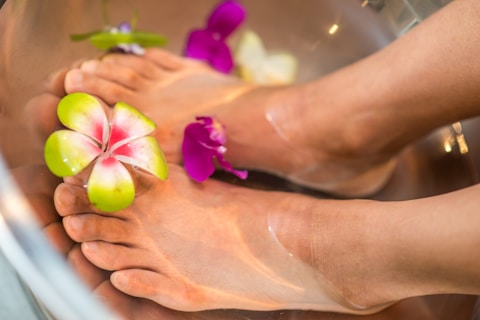
Photo by Rune Enstad on Unsplash
The Culture of DOING
First, let me say this:
Routines are perfectly acceptable.
Therapy is perfectly acceptable.
Boundaries, rest, skincare, journaling, and yoga are all perfectly acceptable.
However, rather than being a private practice of integration, we have transformed self-care into a public performance of alignment.
We have improved the healing optics.
The language has been acquired by us.
We are experts at captioning.
At times, we continue to live according to the same patterns.
We're still in relationships that drain us.
We continue to work at jobs that break us.
We continue to leave ourselves in subtly acceptable ways.
The style changed.
There was still self-abandonment.
Long-term internal alignment is rarely maintained by behavioral changes motivated by image maintenance or external validation, according to research in self-determination theory.
Authentic motivation must come from internal value integration, not social reinforcement (Ryan & Deci, 2000).
Translation?
You can’t perform your way into wholeness.


Photo By Estúdio Bloom on Unsplash
Self-Love vs. Self-Care—The Distinction That Matters
I've been sitting with the following:
You take care of yourself.
You are self-loving.
Self-care is doing something.
Identity is self-love.
The behavior is self-care.
The belief is self-love.
One can be seen. Done.
The other is the internal compass and belief and is the foundation.
And at some point, we began attempting to manufacture the foundational using the visible.
We began taking care of ourselves in the hopes that it would lead to self-love.
However, this is often the misunderstood portion, which gets exchanged for external validation.
The internal consensus that you are important is self-love.
Not because you made the most of yourself.
Not because you sufficiently recovered.
Not because you merited it.
This is inherent, because you are alive and existence is real.
Unconditional self-worth, not something acquired via achievement or productivity, has long been stressed by humanistic psychology as the cornerstone of psychological stability (Rogers, 1961).
Love for oneself is not the end goal.
It’s the operating system.


Photo By Nick Fewings on Unsplash
Photo By Nechama Lock on Unsplash
When Self-Care Becomes Avoidance Disguised as Healing


This is where the change in beliefs occurs.
Avoidance of self-care occurs when:
You set limits but don't follow through on them.
You take a break, but you never face the source of your fatigue.
You journal but never change the behavior.
Even though you claim that "I choose myself," you still go for what is comfortable rather than what feels right.
It's not overt.
It is reinforced by society.
It is praised.
It's still avoidance, though.
Upgrading your routine is simpler than raising your standards.
Curating your healing is simpler than facing your fear.
Saying "I'm protecting my peace" is simpler than acknowledging that you're worried about being misinterpreted.
When avoidance is presented as healing, it feels beneficial.
However, it doesn't change who you are.
Your body is aware of the distinction.
Photo By Iulia Mihailov on Unsplash
I've come to the following realization:
The first step is not self-care.
It's self-love.
The subtlety, however, is where maturity resides.
When self-love is active, self-care becomes essential.
Not earlier.
Your nervous system requires assistance when you begin to enforce boundaries.
Your body requires regulation when you make significant life decisions that are in line with your value.
You need recovery when you stop doing things that drain you.
You need to ground yourself when you're moving into something new.
After self-love upends your previous life, self-care becomes the stabilizing layer.
That’s not performance.
That’s protection.
And there’s a difference.
The Hidden Part Unmentioned


PhotoBy Volodymyr Hryshchenkoon Unsplash
Here’s what makes this deeper than a critique of culture:
Self-love and self-care are not opposites.
They are cyclical partners.
Self-love initiates change.
Self-care sustains it.
Consistency integrates it.
Embodiment stabilizes it.
At first, self-love is fragile.
It sounds like:
“I deserve better.”
Then action activates it:
You say no.
You leave.
You stop over-explaining.
You choose alignment over approval.
Then self-care becomes infrastructure:
Rest.
Therapy.
Silence.
Movement.
Stillness.
And over time, consistency rewrites identity.
You no longer have to convince yourself you matter.
You know.
That’s when self-love becomes an internal state instead of a concept.
That’s when self-care is no longer a performance — it’s maintenance.
That’s protection.
And there’s a difference.
The Cycle No One Explains


Photo By Bao Menglong on Unsplash
Photo By Scott Rodgerson on Unsplash
Why This Matters


A lot of what I’m observing isn’t malicious.
It’s misguided.
We’re living in a culture that has somehow become desperate for belonging.
That performs toxic challenges and makes self-harm a trendy thing for performance.
But self-harm was never a viral act for approval.
And wellness culture offers identity.
It says:
“If you have the routine, you belong.”
“If you know the language, you’re evolving.”
“If you set boundaries publicly, you’re empowered.”
But empowerment isn’t aesthetic.
It’s structural.
It changes who you are when no one is watching.
In my previous diary entry, When Silence Felt Safer Than Truth, I wrote about cultural conditioning and the ways we abandon ourselves to remain acceptable. This is a continuation of that thread.
Sometimes self-care becomes the socially acceptable way to continue that abandonment — just with better vocabulary.
It’s not that people don’t want to change.
It’s that real change destabilizes identity.
And destabilizing identity requires courage.


Not affirmation.
Not routines.
Not aesthetics.
It requires:
Honesty that disrupts comfort.
Decisions that disappoint others.
Standards that narrow your options.
Self-trust when validation disappears.
Consistency when no one claps.
Self-compassion research by Dr. Kristin Neff distinguishes between self-kindness as an internal orientation and self-care as a behavioral expression. One informs the other—but they are not interchangeable.
Self-love without self-care collapses under pressure.
Self-care without self-love becomes performance.
Together, practiced consistently, they create sovereignty, assisting you in mastering your ability to transcend the norms created to internally and externally devalue you, ever striving for something rooted in love and purpose. Something meaningful from the heart. Something positive and uplifting.
What Real Self-Love Requires
Photo By Elisa Stone on Unsplash
Photo By Edgar Chaparroon Unsplash
A Belief Shift
Here’s the belief shift:
Self-care doesn’t create self-love.
Self-love activates self-care.
Self-care stabilizes self-love.
Consistency makes it permanent.
If your routines disappeared tomorrow, would your self-worth remain?
If your captions stopped, would your boundaries hold?
If nobody validated your growth, would you still choose alignment?
That’s the difference between healing and performing healing.
The Question I’m Sitting With
Are you doing self-care as a performance, hoping it will create self-love?
Or are you practicing self-care as reinforcement of self-love already claimed?
Are you evolving privately—or curating publicly?
Are you integrating—or participating?
There is no shame in recognizing the pattern.
Awareness is the first interruption.
And interruption is where mastery begins.
If This Stirred Something
If this feels uncomfortable, that’s not an accusation.
It’s an invitation.
An invitation to move from aesthetic healing to embodied alignment.
An invitation to stop optimizing optics and start stabilizing identity.
An invitation to let self-love and self-care work as a team—not as substitutes.
My work—in mentoring and in Self-Mastery, Spiritually Speaking—lives exactly here.
In the space between performance and practice.
Between conditioning and sovereignty.
Between avoiding yourself and finally facing yourself.
The real work is quiet.
It doesn’t photograph well.
It won’t always be applauded.
But it will change your life in ways a Sunday reset never could.
And that difference?
Your body and soul already know it.
The Subtle Test
Here’s how you know which one you’re operating from.
When you love yourself:
Boundaries aren’t announced—they're enforced.
Rest isn’t aesthetic—it's honored.
No isn’t explained—it's sufficient.
Your needs aren’t negotiated—they're respected.
When you’re performing self-care:
Boundaries are content.
Rest is curated.
No is dramatic.
Needs are conditional.
The difference is quiet.
But it’s real.
Integration: Where Alignment Lives
The goal isn’t to abandon self-care.
The goal is to integrate it.
Self-care should not be a substitute for self-love.
It should be the reinforcement of it.
When consistency exists with care routines — real ones, not curated ones — self-love deepens.
When you repeatedly put yourself first in alignment with your values, identity shifts.
Action becomes embodiment.
Embodiment becomes state.
And self-love stops being something you’re trying to achieve.
It becomes who you are.
That’s integration.


PhotoBy Sarah Lee on Unsplash
Photo By Ava Sol on Unsplash


Photo By Danielle-Claude Bélanger on Unsplash


Photo By Derick McKinney on Unsplash
Photo By q u i n g u y e n on Unsplash
HoneyDew Bett’R
Where wellness meets wisdom—offering guidance, tools, and encouragement for those pursuing healing, self-mastery, and a purpose-led life.
Quick Links
📧 ✉️ 🗣️📨