

Whole & Complete: Leaves No Room to Compare or Compete
When you're whole, you don't compete. But what happens when others compete with you while you're busy pouring into them? A fierce look at reciprocity, sovereignty, and self-mastery — and the secret competitors hiding inside your own community.
SELF-WORTHEMOTIONAL MASTERYMENTAL CLARITY & COGNITIVE MASTERYENEGETIC AND PHYSICAL BOUNDARIESSPIRITUAL DISCERNMENT


Friday, March 13, 2026
Feeling: Observant. Clear. Noticing a pattern of toxic or NON healthy competition in general.
Attitude: Prepare for a rant.
Introduction
You may notice the date this was actually written. I have refined this entry many times. I wondered what the best point of view was and how to present it without being offensive. Then I realized there is no way to present this without offending those who are guilty.
But I am not writing this for those who carry this toxic pattern. This needs to be said for those who encounter these toxic patterns—people who think they can make you insecure using their own insecurities. For those who do pour love and consideration non-stop and then get crickets when it's time to have that returned.
So I decided to be me. And that means keeping it raw and real: not only for those who have to deal with this but also for those who need to look in the mirror and see themselves just as we see you.
Reciprocity Is Not a Preference. It Is a Universal Law.
Here is the spiritual truth that no amount of "being the bigger person" can override: reciprocity is law.
Not a social nicety. A personality preference. Something reserved for transactional relationships.
Energy exchanged—given, poured, invested—moves in accordance with universal principles that do not bend for anyone's comfort, including yours.
What you give returns. Not always immediately. Not always from the same source. But it returns. The universe is not sloppy about energy. It is precise.
And the inverse is equally true.
When you are consistently giving into a space that does not reciprocate—when you are pouring, celebrating, holding, and supporting—and that energy is being received without being returned, you are not just experiencing bad friendship.
You are participating in an energetic imbalance that, if left unaddressed, will accumulate. In your body. In your creative output. In the quiet places where your own needs have been indefinitely deferred.
This is not a judgment of the people on the other end of that dynamic. It is simply the law. And like all laws, it operates whether or not you believe in it, whether or not you name it, whether or not it's comfortable to acknowledge.
The practical reality mirrors the spiritual one: relationships, communities, and ecosystems that are structurally extractive do not sustain.
What cannot be replenished eventually runs dry. You can be the most abundant person in the room and still be depleted by a dynamic that only ever flows one direction.
Choosing reciprocity is not selfishness. It is aligned with law.
What It Actually Looks Like When Someone Competes With You While You're Pouring Into Them
Because this pattern deserves to be named specifically. Not vaguely. Not gently. Specifically.
It looks like sharing your wins and being met with a redirect to theirs.
It looks like celebrating their milestones loudly and having yours acknowledged minimally, if at all.
It looks like offering your knowledge, your network, and your time—and watching it get absorbed without acknowledgment or, worse, repositioned as their own insight.
It looks like someone who becomes visibly uncomfortable when things go well for you. Who finds a way to introduce comparison or competition into conversations where none existed (while you're thinking—this wasn't about you.)
Who positions themselves as your equal in spaces where they have spent very little time, while you have invested significantly? Who shrinks your wins quietly—not with direct criticism, but with the specific silence that says, "I don't want to give you that."
Or how about those that steal your ideas? Then they never even give you the credit for it or say thanks for that. The ones that you give advice to then they set out and speak to others as if it was their own insight that helped them get into a better position.
It looks like being the person who always shows up and quietly realizing that when your moment comes, the room is somehow less full and goes quiet.
And here is what makes this dynamic particularly sharp for people who operate from genuine wholeness: you see it.
You see it clearly because you are not distorted by your own insecurity.
You know the difference between someone who is struggling and someone who is positioning. You know the difference between capacity and choice. Spiritual discernment is one of your natural gifts, and it does not lie.
The question has never been whether you could see it. The question is what you choose to do once you do.
The Energetic Cost of Unreciprocated Giving
When you are always the one pouring out—celebrating, supporting, championing—without receiving that energy back, it creates an imbalance in energy that builds over time.
This is not theoretical.
It is physical, a low-grade fatigue that has nothing to do with how much sleep you are getting. A feeling of invisible depletion.
A sense of disconnection between who you are in those relationships and who you are when you are alone, unencumbered by the work of being the energy source for everyone else.
From an energetic boundaries point of view, being the constant giver without the energy coming back is draining—and it keeps you in a reactive, contracted place rather than an expansive, creative place. It means your energy is always flowing out into spaces where it is not being replenished.
Giving your relationships space, as I did, is not the same thing as rejecting them.
It is a boundary. It is the act of sovereignty that says, “I will no longer organize my energy around people who do not respect it.” That is not withholding.
That is discernment. And discernment is one of the most powerful forms of self-mastery available to us.


Wholeness Does Not Make You Immune. It Makes You Discerning.
Let's dismantle a myth.
Feeling whole, operating from abundance, moving through life without comparison or competition—none of that protects you from the weight of other people's fragmentation.
What it does is give you the clarity to name it and the sovereignty to respond from your own center rather than from reaction.
The person who is whole does not absorb the projection. But they do feel it.
They feel the asymmetry in the room.
They feel the absence of reciprocity before they can articulate it. They feel when a relationship has tilted into extraction—not because they are sensitive in the diminished sense of that word, but because they are attuned.
Finely, precisely, powerfully attuned.
Meaning in tune with yourself.
Your own needs vs. wants.
Your own self-value and worth.
Understanding what you deserve and being willing to let go of anything and anyone that does not provide that sense of foundation and stability.
That attunement is not a liability. It is a leadership quality.
And what it requires is not more grace extended to people who are not extending it back.
It requires energetic boundaries—clear, unapologetic, and non-negotiable. It requires the willingness to redirect your investment without drama, without lengthy explanation, and without the need for the other person to understand or agree.
You do not need consensus to close a door. You do not need permission to redirect your energy. You do not need to explain sovereignty to people who are threatened by it. Or go out of their way to purposely misunderstand you.
You simply move.
The over-giver is often the most capable, most aware person in the room. The irony is that their very capacity can attract people who are drawn to receive rather than exchange.
You attract takers. Manipulators. Gaslighters. Boundary crossers. Habitual line steppers. You attract abusers of kindness who would rather see that positive quality as a door they can continuously access, opened only to feed their need to absorb anything great about your life.
Recognizing that is not cynicism. It is spiritual discernment.
Cultural and collective healing from systems that praised selflessness while penalizing self-advocacy—that is part of this conversation.
Check out this article that takes a look at the mind of these types of imbalances in collective culture.


The Victor's Relationship With Giving
Here is something the victim narrative gets wrong about over-giving: it frames generosity as the problem.
It is not.
Generosity is never the problem.
Misplaced generosity—generosity without discernment, poured into spaces that have demonstrated they cannot or will not honor it—that is the conversation worth having.
Empathy without boundaries equals destruction.
The victor gives. Fully, freely, and without smallness. But the victor also pays attention. The victor tracks not from suspicion, but from intelligence. They notice early what the dynamic is actually built on. They do not rationalize imbalance for the sake of loyalty to a version of the relationship that no longer reflects reality.
And when the data is clear—when the pattern has made itself undeniable—the victor acts.
Not from hurt. From clarity.
Not from resentment. From self-respect.
Not from the need to teach anyone a lesson. From the sovereign understanding that your energy is a resource, and you are its steward.
This is the difference between giving from fear and giving from power.
Giving from fear needs the dynamic to continue because it needs the validation that never quite arrives. Giving from power knows its own worth independent of return—and precisely because of that, it does not continue pouring into spaces that dishonors it.
The victor is generous and boundaried. Always both. Never just one.
Signs the Dynamic Around You Is Rooted in Competition, Not Connection
This is not about suspicion. It is about clarity.
You may be navigating this dynamic if the people around you become most engaged when you are struggling and least engaged when you are thriving.
If your growth is met with subtle repositioning rather than genuine celebration.
If the support you receive is inconsistent—present when it costs nothing, absent when it requires real investment.
If the relationship only ever seems to flow in the direction of their needs, their timeline, and their visibility.
If you notice that your presence in someone's life seems to elevate them while your own needs orbit endlessly at the edge of the conversation.
If you feel—not think, feel—that your wins make someone in your circle smaller. That is not paranoia. That is perception. And in people who operate from wholeness, perception is rarely wrong.
Notice it. Name it to yourself first. And then act accordingly—not from ego, not from a wound, but from the grounded authority of someone who knows exactly what they bring and has decided, clearly and without apology, that it will only go where it is honored.
Self-Mastery Means You Don't Shrink the Mirror
Here is the final and perhaps most important thing to name:
Your wholeness is not the problem.
Your abundance is not the problem. Your ease is not the problem. Your joy, your growth, your capacity to celebrate without threat—none of it is the problem.
The discomfort it creates in others who have not yet done their internal work is their work to do. Not yours to manage.
Self-mastery, in this context, does not mean making yourself smaller so others are more comfortable in your presence. It means remaining fully yourself—fully expressed, fully invested in your own growth, and fully generous with what is yours to give—while simultaneously refusing to subsidize anyone else's fragmentation with your own energy.
That is the mastery. The ability to stay open without staying naive. To stay generous without staying unconscious. To see clearly without becoming cynical. To move with love and with boundaries at the same time, because you understand that the two are not opposites—they are the same thing expressed in different directions.
You are not competing with anyone.
You never were.
The race other people are running with you as the finish line is one they designed without your consent—and you are under no obligation to participate, to slow down, or to explain your pace.
Keep building. Keep celebrating. Keep pouring into what honors you back.
The law will handle the rest.


Frequently Asked Questions
How do I know if someone is genuinely competing with me or just insecure in a way that isn't directed at me?
The distinction is usually in the pattern, not a single moment. Insecurity that isn't directed at you looks scattered—it affects how they move in most areas of their lives.
Competition directed at you specifically tends to activate most visibly around your wins, your visibility, and your relationships. If someone seems particularly unsettled by your growth while functioning normally otherwise, that is directional data worth paying attention to.
Is it possible to maintain relationships with people who compete with you?
It is possible, but it requires clear-eyed honesty about what the relationship actually is and what it is not. If someone is in a competitive dynamic with you, the intimacy of the relationship has a ceiling—because genuine intimacy and connection, platonic or romantic, require safety, and safety requires that both people can fully celebrate each other.
You can choose to keep the relationship at the level it has demonstrated it can hold. But don't ask it to be something it isn't.
How does reciprocity as a universal law apply when the other person isn't aware of the imbalance?
The law operates independently of awareness.
A lack of consciousness about the imbalance doesn't suspend its effects on you or on them. What awareness changes is the opportunity to course-correct. But if awareness is absent and the pattern continues unchanged, the law still applies—which means the energy you are giving into that dynamic is still being drawn from somewhere, and the absence of return is still accumulating. Their awareness is their responsibility. Your response is yours.
What is the difference between energetic boundaries and shutting people out?
Energetic boundaries are about the flow of your investment, not the presence or absence of a relationship. Shutting people out is a wall—binary, total, and often reactive. Energetic boundaries are a gate—intelligent, intentional, and calibrated to what the dynamic has shown it can hold. You can still be in proximity to someone while redirecting the depth of your investment. Boundaries are not punishment. They are stewardship.
Why do people compete with those who are pouring into them?
Because receiving can be destabilizing for someone who hasn't healed their relationship with their own worth. When someone gives to you freely, without strings, from genuine abundance, it can surface everything in you that doesn't believe you deserve it or that is afraid of what being seen as the one who receives makes you. That internal conflict sometimes comes out sideways as competition. It is a projection of their own fragmentation, not a reflection of your value. Understanding this doesn't mean tolerating it. It means you don't take it personally while you take action.
What does sovereign generosity look like when you've identified a one-sided dynamic?
It looks like redirecting your investment without drama or announcement. It looks like continuing to be genuinely yourself—celebratory, abundant, clear—while simply no longer placing your deepest resources into a space that has shown it cannot honor them. Sovereign generosity doesn't require the other person to agree with your assessment, understand your boundaries, or validate your decision. It operates from internal authority, not external consensus. You give where it grows. You redirect where it drains. That is the whole practice.
Explore more on self-mastery, emotional sovereignty, and living from your own authority at The Bett'R Days Diary.


Let's be clear about something from the start.
I don't compete for anyone or anything unless there's an ACTUAL HEALTHY COMPETITION happening.
But what I will not do is participate in secret competitions.
Not quietly.
Not subtly,
Not underneath a smile.
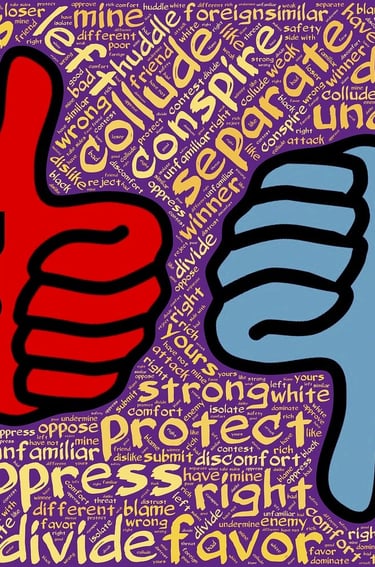
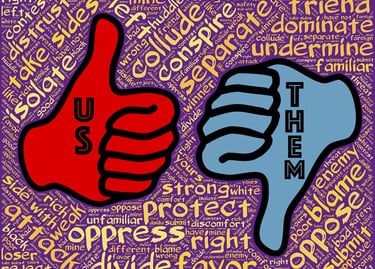
Not for a job, a friend, affection, attention, or any of the countless ways society has engineered competition as a tool for social control, which then permits separation and segregation.
I've never felt an urge to measure my path against another's.
I do not shrink when another rises, and I do not rise at anyone else's expense. I celebrate myself and others freely. I pour generously and move through this world from a place of genuine abundance, rooted in love and respect.
I understand that God has me right where I am supposed to be. I have no control over that—and I don't want it. I give Him control of my life because I know He will guide me toward my purpose and highest potential. That's not a passive posture. That's the most sovereign decision I've ever made.
Now—that doesn't mean I've always responded with grace to those who didn't operate the same way.
When I was younger, I engaged. I reacted.
I allowed other people's fragmentation to pull me into games I never agreed to play. Time and life have since taught me that the most powerful thing you can do in the face of someone else's secret competition is simply smile and continue.
I've learned whoever is bothered by you or me being who we were created to be also continues to be bothered because they are not whole within themselves.
But, speaking from my own personal experience, I have noticed a culture of vultures that strangely seem to think I measure my own personal worth by possessions.
As if having some attachment to materialism was ever a thing of substance and reward. I have watched people compete with me or others, compare themselves, and measure themselves against others almost my entire life.
This is a sad and strange, even inhumane dynamic among the general population.
People I was actively pouring into.
People that were being rooted for, celebrated, and championed.
Some people who were sitting at tables others helped build, eating food others helped prepare, and still somehow measuring themselves against the same people that wanted the best for them—they want nothing for you.
They want you to stand behind, not beside them—you're blocking their good side.
They want you to keep cheering them on while their hearts break when you are winning; hence, they disappear and "forget" to show up to your celebration.
They plaster smiles upon their faces, like mannequins, and act like the 'realistic' viewpoint they share is just to make sure you've thought everything through.
While this viewpoint cuts down your happiness, slices through your celebrations, and even diminishes your goals to where they do not mean much.
What I have learned is that they hope you don't take yourself too seriously with the "isms" or the slip of...
"anybody can do that," as if they can.
Or the sly "so-and-so said that," as if to say you didn't create or think of something.
Or the quick "you can't do that" line, to plant seeds of doubt into your goals.
And the "Are you still working on your 'little' business?" as if working for yourself and standing fully within your own sovereignty could ever be just a 'little' thing!
Poisoning while positioning.
Threatened while offering threads of spite, disguised as "I just want the best for you."
Racing against themselves in a self-created competition for their own personal victory that neither you nor I agreed to.
Better yet, neither you nor I even knew about it to agree.
No objection.
No rules.
No standard.
No judge.
And the prize?
They just win.
Or so they believe.
What they're actually winning is a distorted sense of being "better" than you—a prize so hollow, only the insecure would enter the race for it. "I know, it's weird!!!
As if God were nothing and not the all.
As If the Almighty doesn't have the power or doesn't have the proper judgment for who is placed where.
As if you could ever determine what their own self-value and worth are supposed to look like.
As if these self-made competitions could ever have power or authority to determine your value, worth, fate, or life path.
As if you compared yourself to them, and they are the standard to which you need to reach.
It reveals what may be a subtle sociopathic pattern.
A need for external validation so consuming that it destroys good bonds with even better people.
Yes—the audacity of it in 2026 is staggering. And today, we're naming it. Not comparison as a personal failing.
Not the work of learning to stop measuring yourself against others. That is someone else's conversation.
This one is for the people who have always known their worth—who have never needed to borrow confidence from someone else's diminishment—and who are finally naming, clearly and without apology, what it looks like when others project their own fragmentation onto you.
This is a sovereign conversation. And it starts with the truth.
In fact, that's where this discussion begins.
Not by contrast. Not with secret competition.
However, in the more subdued and subtle task of comprehending why some of us pour out endlessly—celebrating, supporting, and advocating—while observing relentless issues with people who do not return it.
And what it means to finally stop accepting others in their distorted dysfunction of that dynamic they describe as love, but is NOT love at all. It's an unhealthy social pattern.
Love does not compete, compare, speak death over your life, project failure, or blockages; never celebrate your wins; neglect to support when you're sick; or backbite who you are as an individual behind your back.
Real love does not and would never intentionally hurt you all in the name of winning a false competition. There is NO excuse for this ass-backward method of getting a leg up, especially if this is happening within a family dynamic.


By Norbert Braun on Unsplash
By johnhain on Pixabay
By Sydney Latham on Unsplash


By Content Pixie on Unsplash
By That's Her Businesson Unsplash
By Erin Larson on Unsplash
By Iulia Mihailov on Unsplash
By Emile Perron on Unsplash
By Geralt on Pixabay
By Elena Mozhvilo on Unsplash
By Tim Mossholder on Unsplash
HoneyDew Bett’R
Where wellness meets wisdom—offering guidance, tools, and encouragement for those pursuing healing, self-mastery, and a purpose-led life.
Quick Links
📧 ✉️ 🗣️📨